
Temperature Mapping Services in UAE
Caltech provides professional temperature mapping services in UAE for cold rooms, warehouses, refrigerators, freezers, pharmaceutical storage areas, laboratories and other temperature-controlled environments.
A storage area can show the correct temperature on a single display while different locations within the same room experience different conditions. Temperature mapping helps identify these variations by monitoring multiple points across the area over a defined period.
Our temperature mapping support is designed to help businesses understand temperature distribution, identify hot and cold spots, review storage conditions and maintain appropriate temperature records.
We support suitable requirements in Sharjah, Dubai and other serviceable locations across the UAE, depending on the facility, equipment and project requirements.
What Is Temperature Mapping?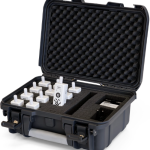
Temperature mapping is a systematic study used to determine how temperature is distributed throughout a controlled environment.
During a mapping study, calibrated temperature data loggers are positioned at selected locations within the area. The instruments record temperature readings over an agreed monitoring period. The collected data is then reviewed to identify temperature variations and areas that may require further attention.
This is particularly useful for facilities where products, samples, medicines, food products or other temperature-sensitive materials must be stored within defined conditions.
Temperature mapping can help answer important questions such as:
- Is the temperature consistent throughout the room?
- Are there areas that become warmer or colder than others?
- Where are the potential hot and cold spots?
- Does the room maintain the required temperature during normal operation?
- Are storage locations suitable for temperature-sensitive products?
- Is additional monitoring or corrective action required?
Why Is Temperature Mapping Important?
Temperature is rarely identical at every point in a room. Air circulation, doors, cooling equipment, insulation, room size, product loading and external conditions can all influence temperature distribution.
A temperature mapping study can help businesses identify these variations before they affect stored products or processes.
It may support:
- Identification of hot and cold spots
- Better understanding of temperature distribution
- Verification of storage conditions
- Investigation of temperature variations
- Internal quality procedures
- Temperature-sensitive product storage
- Audit and inspection documentation
- Validation and qualification activities where applicable
For facilities that rely on accurate temperature measurements, mapping should be considered alongside regular instrument calibration. Caltech also provides Temperature and Humidity Calibration Services for suitable temperature and humidity measuring equipment.
Temperature Mapping for Cold Rooms
Cold room temperature mapping is commonly required where products must be maintained within controlled temperature conditions.
Cold rooms may experience different temperatures near doors, cooling units, corners, walls and areas with limited airflow. Mapping helps identify these variations across the usable storage space.
A suitable study may evaluate:
- Temperature distribution throughout the cold room
- Areas close to evaporators or cooling units
- Areas near doors and entrances
- Corners and other potential low-airflow locations
- Upper and lower storage levels
- Potential hot and cold spots
- Temperature recovery after door opening, where required
The exact monitoring locations and study duration should be determined according to the room design, operating conditions and customer requirements.
Warehouse Temperature Mapping
Large warehouses can have significant temperature differences between different locations.
Warehouse temperature mapping helps establish how temperature changes across the storage area and can identify locations that may not represent the average room condition.
Factors such as warehouse size, ceiling height, air-conditioning or refrigeration systems, doors, loading areas, sunlight and storage arrangements can influence temperature distribution.
Mapping can therefore be useful when establishing appropriate storage areas for temperature-sensitive materials.
For businesses that use temperature data loggers for ongoing monitoring, Caltech can also support suitable calibration requirements through its calibration services in UAE.
Pharmaceutical and Healthcare Temperature Mapping
Temperature control is particularly important when storing temperature-sensitive pharmaceutical, healthcare and laboratory products.
Pharmaceutical temperature mapping may be required for suitable storage environments such as:
- Pharmaceutical warehouses
- Medicine storage rooms
- Medical stores
- Vaccine storage areas
- Refrigerators
- Freezers
- Cold rooms
- Laboratories
- Sample storage areas
- Controlled-temperature rooms
The purpose of the study is to understand the temperature profile of the storage environment and identify locations that may experience conditions outside the required operating range.
The appropriate mapping methodology should always be determined according to the facility, products, equipment, applicable procedures and customer requirements.
Freezer and Refrigerator Temperature Mapping
Refrigerators and freezers can develop temperature differences because of airflow patterns, door openings, loading conditions and the location of cooling components.
Freezer temperature mapping and refrigerator mapping can help identify temperature variations throughout the usable storage area.
Depending on the application, the study may consider:
- Different shelf levels
- Front and rear areas
- Areas close to the door
- Areas close to cooling elements
- Upper and lower sections
- Frequently accessed locations
- Product loading conditions
This information can help businesses make more informed decisions about where temperature-sensitive products should be positioned.
Laboratory and Controlled Environment Mapping
Laboratories and controlled environments may require temperature monitoring to support sample storage, testing activities and other controlled processes.
Temperature mapping can be considered for:
- Laboratory storage rooms
- Sample storage areas
- Incubators
- Environmental chambers
- Controlled-temperature rooms
- Research facilities
- Testing environments
The monitoring plan can be developed according to the physical layout, equipment characteristics and intended application.
Our Temperature Mapping Process
Caltech follows a structured approach based on the facility and customer requirements.
1. Site and Application Review
We first review the type of facility, room dimensions, temperature requirements, equipment arrangement and intended use.
This helps determine a suitable monitoring strategy.
2. Mapping Plan
The monitoring locations are selected according to the room layout, potential temperature variation and project requirements.
The number and position of data loggers depend on factors such as room size, configuration and application.
3. Placement of Data Loggers
Calibrated temperature data loggers are positioned at selected locations throughout the monitored area.
The objective is to collect representative information from different parts of the environment rather than relying on a single temperature reading.
4. Temperature Monitoring
The data loggers record temperature readings during the agreed monitoring period.
Where required, the study can consider normal operating conditions and specific operating events such as door opening or changes in room usage.
5. Data Analysis
After monitoring is completed, the recorded data is reviewed to identify temperature trends, variations and potential hot or cold spots.
The results can then be compared with the applicable temperature requirements for the application.
6. Temperature Mapping Report
The findings are compiled into a clear report containing the relevant mapping information, recorded results and observations.
Where applicable, the report can include temperature graphs, logger locations, minimum and maximum readings and identified areas of variation.
What Is Included in a Temperature Mapping Report?
The exact contents depend on the project requirements, but a temperature mapping report may include:
- Facility and room details
- Mapping date and monitoring period
- Data logger identification
- Logger placement information
- Temperature graphs
- Minimum temperature readings
- Maximum temperature readings
- Temperature variation
- Hot and cold spot observations
- Room layout or logger location plan
- Relevant monitoring results
- Supporting calibration information
- Summary of findings
- Recommendations where applicable
Clear documentation makes the results easier for quality teams, facility managers and other responsible personnel to review.
Calibrated Data Loggers for Temperature Mapping
Accurate monitoring equipment is an important part of a temperature mapping study.
The data loggers used for mapping should be suitable for the required temperature range, monitoring period, accuracy and application.
Caltech can also support suitable temperature and humidity instrument calibration, helping customers maintain reliable measurement equipment and supporting calibration records.
For ongoing temperature monitoring requirements, businesses may also consider suitable reusable or single-use data logging solutions based on their application.
Temperature Mapping Services in Sharjah and Dubai
Caltech provides temperature mapping support for suitable facilities in Sharjah and Dubai, with other UAE locations considered according to project requirements.
Our services may be relevant to:
- Pharmaceutical companies
- Healthcare facilities
- Laboratories
- Warehouses
- Cold-chain businesses
- Food storage facilities
- Manufacturing companies
- Logistics companies
- Research facilities
- Industrial facilities
- Temperature-controlled storage operators
If you are unsure whether your facility requires temperature mapping, you can provide us with the room type, dimensions, temperature range and application. Our team can review the requirement and advise on the appropriate service.
When Should Temperature Mapping Be Performed?
A temperature mapping study may be considered:
- When commissioning a new temperature-controlled room
- After major refrigeration or HVAC modifications
- After significant changes to room layout
- When investigating temperature variations
- Before storing temperature-sensitive products
- As part of qualification or validation activities where applicable
- When required by internal quality procedures
- When storage conditions need to be documented
- Following significant equipment changes
The appropriate frequency and methodology depend on the facility, application, operating conditions and applicable requirements.
Temperature Mapping and Calibration – What Is the Difference?
Temperature mapping and calibration are related but serve different purposes.
Calibration checks the accuracy of an individual measuring instrument by comparing its readings with an appropriate reference standard.
Temperature mapping evaluates how temperature is distributed throughout a physical space by using multiple monitoring points.
For example, a warehouse temperature display may be calibrated correctly, but that does not necessarily mean that every location inside the warehouse remains at the same temperature.
This is why businesses may need both reliable calibrated instruments and a properly planned mapping study.
You can learn more about Caltech’s broader calibration services and temperature and humidity calibration services.
Why Choose Caltech for Temperature Mapping?
Caltech focuses on practical temperature measurement and calibration support based on the customer’s application.
Our approach includes:
- Application-focused mapping plans
- Suitable calibrated data logging equipment
- Monitoring across selected locations
- Clear temperature data and graphs
- Identification of temperature variations
- Structured reporting
- Support for temperature-controlled environments
- Service availability in Sharjah and Dubai
- Support for related calibration requirements
The exact scope, monitoring period and reporting requirements are confirmed based on the facility and customer requirements.
Frequently Asked Questions
What is temperature mapping?
Temperature mapping is the process of monitoring temperature at multiple locations within a defined area to understand temperature distribution and identify variations such as hot and cold spots.
What facilities require temperature mapping?
Temperature mapping may be useful for cold rooms, warehouses, refrigerators, freezers, pharmaceutical storage areas, laboratories, controlled-temperature rooms and other temperature-sensitive environments.
How long does a temperature mapping study take?
The duration depends on the facility type, room size, operating conditions, monitoring requirements and applicable procedures. The monitoring period should be agreed according to the specific application.
How many data loggers are required?
The number of data loggers depends on factors such as room dimensions, layout, storage configuration, temperature range and the purpose of the study. A suitable monitoring plan should be established before the study begins.
What is a temperature mapping report?
A temperature mapping report documents the monitoring conditions and results. Depending on the project, it may include logger locations, temperature graphs, minimum and maximum readings, temperature variations and observations.
Can temperature mapping be performed in a cold room?
Yes. Cold rooms are one of the common applications for temperature mapping. The study can help identify temperature variations across different areas of the room.
Do refrigerators and freezers need temperature mapping?
Temperature mapping may be appropriate where refrigerators or freezers are used for temperature-sensitive products and the temperature distribution needs to be understood or documented.
Does temperature mapping replace calibration?
No. Calibration verifies the accuracy of an individual measuring instrument, while temperature mapping evaluates temperature distribution across a physical area.
Does Caltech provide temperature calibration?
Yes. Caltech provides suitable temperature and humidity calibration services for measuring instruments and environmental equipment in Sharjah and Dubai.
Which areas in the UAE does Caltech serve?
Caltech supports suitable requirements in Sharjah and Dubai. Other UAE locations can be discussed based on the project requirements and service availability.
Range
Send the room type and the temperature the room must stay at, such as 2 to 8 °C. The quotation confirms whether that room can be mapped.
Time
The study time depends on the room size. It is confirmed with the quotation.
Report
A temperature mapping report is provided, with the logger locations, the readings, and the hot and cold spots.
Request Temperature Mapping Services in UAE
If you need temperature mapping services in UAE for a cold room, warehouse, pharmaceutical storage area, refrigerator, freezer, laboratory or another controlled environment, contact Caltech with your facility details.
Please provide:
- Facility or room type
- Approximate room dimensions
- Required temperature range
- Location
- Intended application
- Number of rooms or areas
- Any existing monitoring requirements
We can review your requirement and discuss a suitable temperature mapping approach.
Phone: +971 50 485 0456
Email: info@caltech-eng.com
Service areas: Sharjah, Dubai and other UAE locations subject to project requirements.
For related calibration requirements, visit our Calibration Services page.