
Caltech provides gas detector calibration services for suitable portable and fixed gas-detection instruments in Sharjah and Dubai. Regular calibration helps verify that gas detectors respond correctly and provide dependable warnings when hazardous gases are present.
Gas detectors are important safety instruments in oil and gas, construction, manufacturing, marine, confined spaces and other potentially hazardous environments.
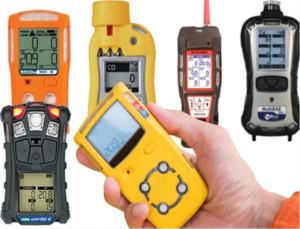
Why Is Gas Detector Calibration Important?
Gas-detector sensors can lose sensitivity because of ageing, contamination, environmental exposure, physical damage or repeated contact with gas.
Regular testing and calibration help businesses:
Verify Detector Response
Calibration checks whether the instrument responds when exposed to suitable reference gas.
Identify Inaccurate Readings
Measurement errors can affect decisions made by workers and safety teams.
Check Alarm Operation
Applicable audible, visual and vibration alarms can be checked during the service.
Reduce Equipment Failure Risk
Regular inspection may identify damaged sensors, blocked openings, battery problems or other faults.
Support Safety Procedures
Calibration records can support workplace safety programs, equipment registers and applicable customer requirements.
Gas Detectors We Calibrate
Depending on manufacturer, model, sensors and required reference gases, Caltech may support:
- Portable gas detectors
- Fixed gas detectors
- Single-gas detectors
- Multi-gas detectors
- Oxygen monitors
- Carbon monoxide detectors
- Hydrogen sulphide detectors
- Combustible-gas detectors
- Ammonia detectors
- Gas transmitters
- Personal gas monitors
- Gas alarm instruments
Send the detector manufacturer, model, gases detected, measurement ranges and quantity to confirm capability.
Portable Gas Detector Calibration
Portable gas detectors are commonly used by workers entering hazardous or confined environments. Their sensors and alarms should be checked according to manufacturer instructions and workplace safety procedures.
Calibration may include:
- Visual inspection
- Battery and display check
- Sensor response verification
- Audible alarm check
- Visual alarm check
- Vibration alarm check
- Reading comparison using suitable reference gas
- Final functional verification
Fixed Gas Detection System Calibration
Fixed gas-detection systems continuously monitor selected areas for hazardous gases. Depending on system design and capability, service may include suitable sensors, transmitters, control panels and alarm outputs.
Before requesting service, provide:
- System manufacturer and model
- Number of sensors
- Gas types
- Measurement ranges
- Sensor locations
- Required alarm checks
- Site location
Gas Alarm System Testing
Gas-detection alarms provide warnings when measurements reach configured thresholds. Applicable alarm testing may include audible, visual, vibration and control-output checks.
Alarm verification depends on the instrument configuration, approved procedures and site requirements.
Bump Testing vs Gas Detector Calibration
A bump test confirms that the detector’s sensors and alarms respond when exposed to gas. It does not normally provide a complete evaluation of measurement accuracy.
Calibration compares the detector’s readings against suitable reference gas. Adjustment may be completed when required, supported by the instrument and approved by the customer.
Our Gas Detector Calibration Process
- Record the detector make, model and serial number.
- Confirm the installed sensors and gas types.
- Inspect the detector for visible damage.
- Check the display, battery and alarm functions.
- Apply suitable reference gas.
- Compare the detector readings and response.
- Report equipment outside the required tolerance.
- Complete adjustment when available and approved.
- Perform final verification.
- Provide applicable service documentation.
On-Site and Off-Site Calibration
Portable gas detectors may be processed off-site. On-site gas detector calibration may be available for fixed systems or customers with multiple detectors.
Availability depends on detector type, required gases, quantity, site access and safety conditions.
Industries We Support
Caltech’s gas detector calibration services may support:
- Oil and gas
- Construction
- Confined-space operations
- Manufacturing
- Marine and shipyards
- Facilities management
- Warehouses
- Wastewater treatment
- Industrial maintenance
- Laboratories
Frequently Asked Questions
How often should gas detectors be calibrated?
Calibration frequency depends on manufacturer instructions, sensor type, usage, exposure and workplace safety procedures.
What is a gas-detector bump test?
A bump test briefly exposes the detector to gas to check whether its sensors and alarms respond.
Can Caltech calibrate multi-gas detectors?
Suitable multi-gas detectors may be calibrated depending on their model, installed sensors and required gases.
Is on-site gas detector calibration available?
On-site service may be available in Sharjah and Dubai depending on detector quantity, gas requirements and site conditions.
What information is required for a quotation?
Provide the detector manufacturer, model, gases detected, measurement ranges, quantity and service location.
Request Gas Detector Calibration
Send Caltech your gas-detector details to confirm service capability and receive a quotation.
Phone: +971 50 485 0456
Email: info@caltech-eng.com
Service locations: Sharjah and Dubai